News
Contemporary Mine Remediation
Contemporary Mine Remediation in Practice
Being aware of the potential for unmapped mines, and the requirements for remediation in accordance with EPA requirements, Tomkinson has researched and determined creatives solutions to locate and manage undocumented extant mine infrastructure.
GeoVic Historical Mining records shows nearly 70 points on or directly adjacent to the site. With no details regarding the size or depth of the ‘mines’ and horizontal location accuracy ranges on each of these points being between +/-10-30m, an investigation methodology was required.
Through consultation with Geotechnical Engineers, our civil design engineers and project managers determined the most economical course of action would be to physically investigate the areas of interest, utilising the civil contractors earthmoving equipment.
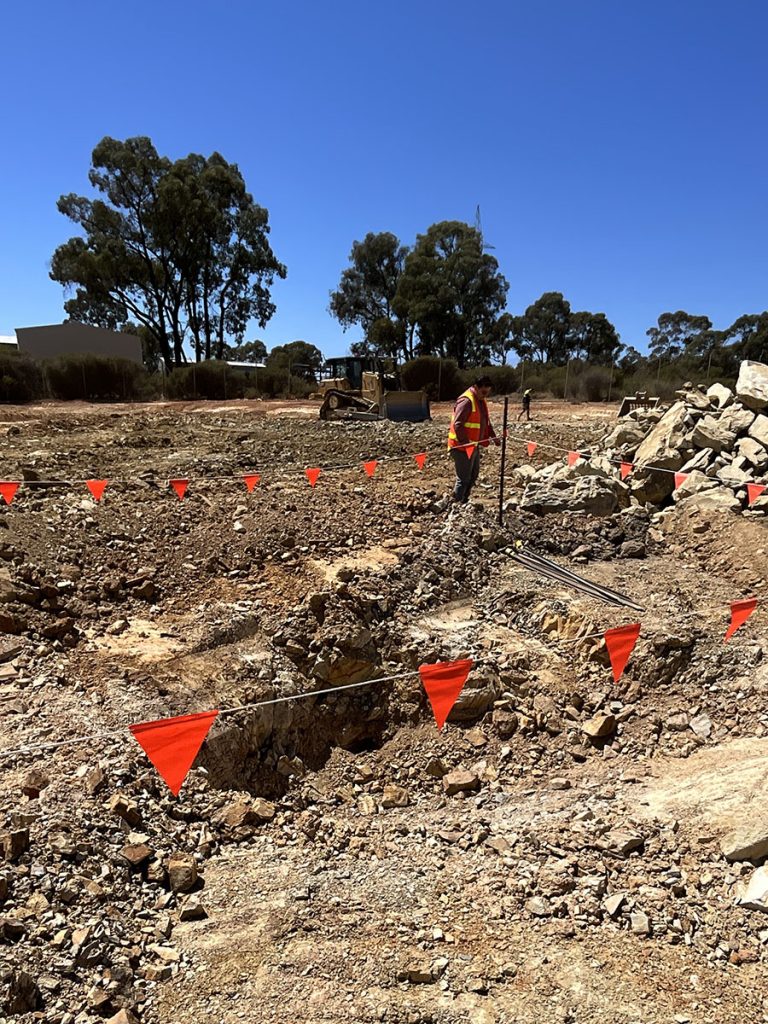
To start with, each of the points and corresponding investigation areas were physically marked out on site and this information was provided to the civil contractor to be included in their GPS equipment so that all site personnel would be aware of the investigation areas. The excavation strategy included utilising excavators with wide buckets to progressively strip the areas, progressively working towards one or more of the mine points.
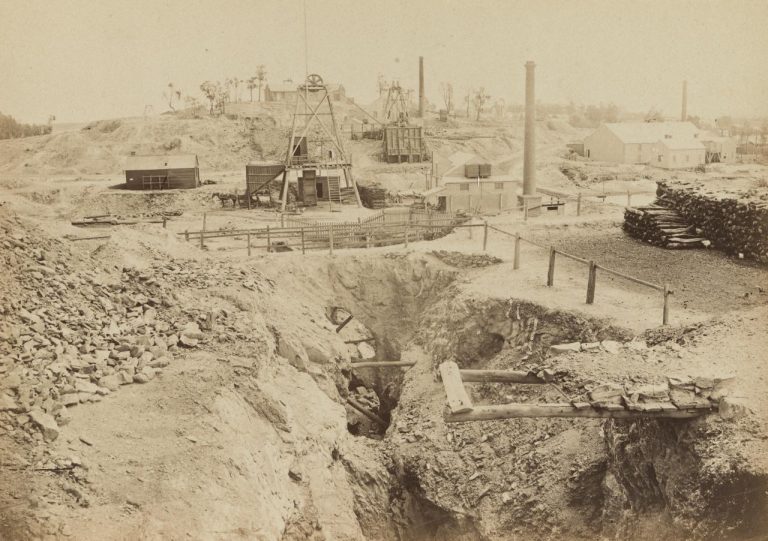
Geotechnical Engineers were engaged to provide on site supervision and direction during this process as there was no set criteria regarding depth, the methodology required excavation of the investigation areas down to a natural or undisturbed level by which it should be apparent whether there is evidence of historic mine shafts or not as this would include the presence of redgum timbers used to prop or cap the shaft and/or distinctly different material (see photos of shafts backfilled with grey mullock material, distinctly different from the surrounding natural material).
This is a new expertise that we have developed over the last year, and can be applied to mine remediation and management in any location.
A Goldfield with a Global Legacy
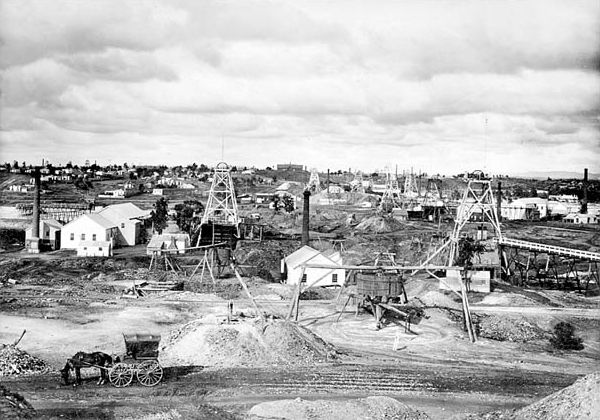
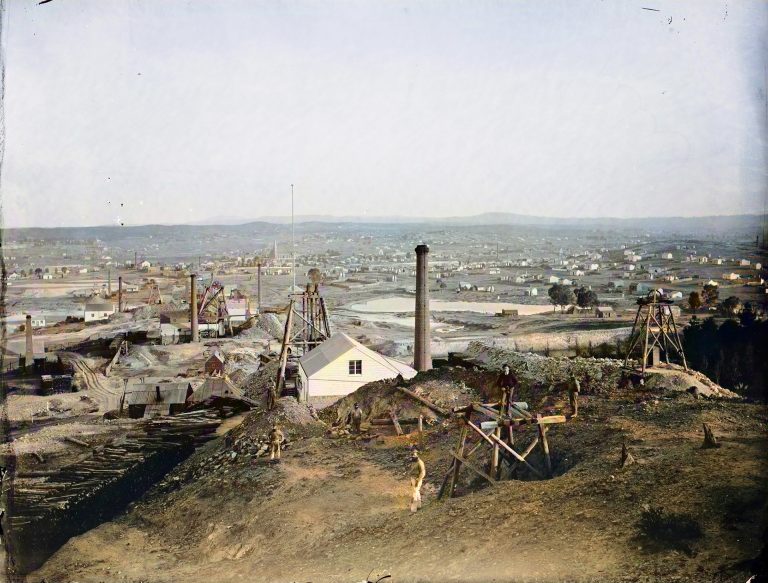
Bendigo has produced over $9 billion worth of Gold since the 1850s – in Australia that’s the second highest producing goldfield to Kalgoorlie. No wonder historic, elaborate bank, hotel private and civic buildings line the streets of old Bendigo. Originally discovered by the wives of two farm workers on a pastoral lease, a Mrs Kennedy and a Mrs Farrell, alluvial gold mining soon made way to deep shaft mining after 10 years. After 100 years the Bendigo Goldfields represented the largest concentration of deep mine shafts for Gold anywhere in the world.
George Lansell was an adventurer from Kent, England who moved to Bendigo in 1853. With his brothers Wooten and William they set up their business as butchers, soap and candle manufacturers.
By 1860 he had invested in deep shaft mining, lost and reinvested a number of times. Lansell was learning what was required to be successful at this type of mining.
1865 was a bad year for mining in Bendigo, but Lansell took advantage of the tough times and bought up many shares in the Advance Mining Company and Cinderella Mine. He insisted that the miners go deeper than ever before and from then on he and his companies reaped massive rewards.
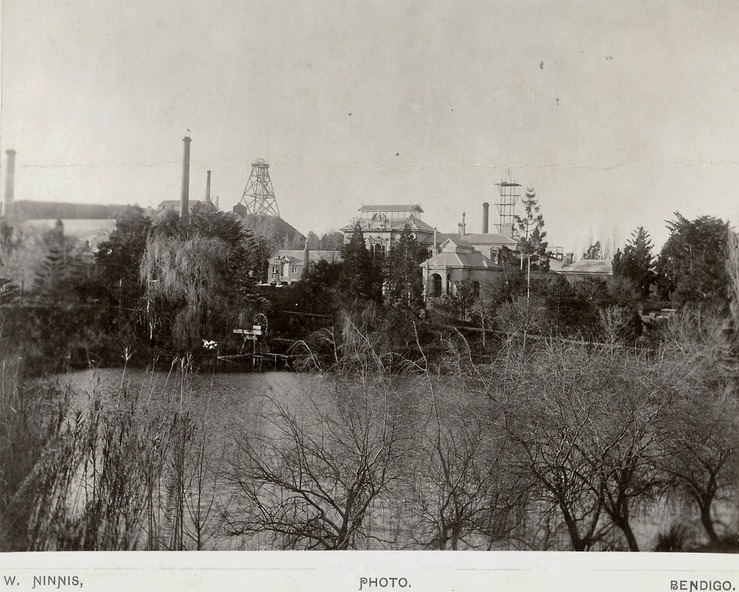
By the 1870s he had accumulated a large fortune, owning Fortuna Mine, the 180 mine and the Garden Gully Mine . Although he was initially always on the edge of financial ruin, his methods paid off and he returned to London the ‘Quartz King’, a millionaire and philanthropist.
From Heritage Estate to Modern-Day Development
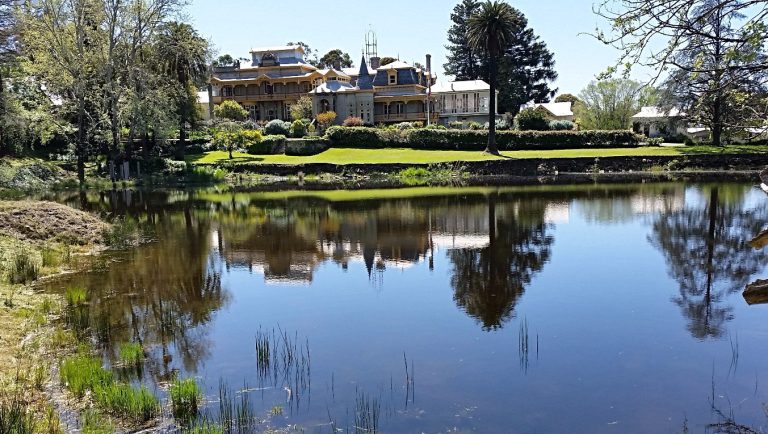
In the late 1880s, Lansell was petitioned by the Bendigo Mining industry to return; he did exactly that and continuously added to and expanded Fortuna Villa, decorating it extravagantly with the finest of artworks and materials, creating a house and grounds of a size and grandeur with few rivals in Australia. He collected furniture, sculpture and art from around the globe and designed a spacious estate featuring walks, lakes and imported plants and flora, all wonderfully oblivious to the arsenic content he was adding to the land!
Fortuna was compulsorily acquired by the Commonwealth in 1942 as the Cartographic Headquarters of the Australian Survey Corps during World War II, and many ancillary structures were added while preserving the main house and ornamental grounds.
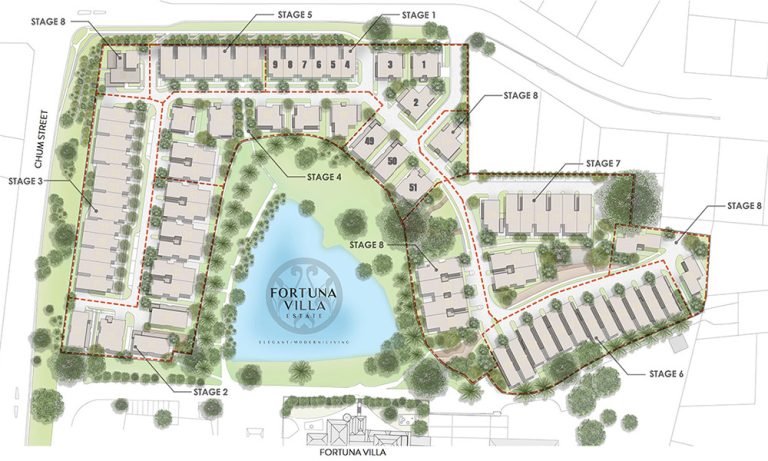
In contemporary times, the Fortuna Mansion now sits on its own title with a Heritage Victoria listing (B1177 https://vhd.heritagecouncil.vic.gov.au/places/68334). The site was rezoned to Comprehensive Development Zone, with opportunity for it to be reimagined as part of contemporary Bendigo. Our client purchased the balance of the land back in 2000ish, and is now in the process of remediation and development so that others can enjoy living in the gardens and surrounds of the mansion with views across the lake and out towards Mt Alexander.